Battle of Lützen 1632
1632 · Europe
16 November 1632 (6 November, Old Style) · The Leipzig road (Via Regia) and Windmill Hill, Lützen, Saxony-Anhalt, Germany
Swedish Army (Gustavus Adolphus) — Imperial Army (Wallenstein) · 12 turns · 57 units
AI personality: Swedish Army (Gustavus Adolphus) Manoeuvre / Imperial Army (Wallenstein) Breakthrough
See this battle in the battle list
Briefing
16 November 1632 (6 November, Old Style). The Leipzig road (Via Regia) and Windmill Hill, Lützen, Saxony-Anhalt, Germany
"My God, my God."
— the last words attributed to Gustavus Adolphus, shot in the fog and smoke (tradition)
A year after his victory at Breitenfeld, King Gustavus Adolphus of Sweden had pressed deep into Germany. In November, Wallenstein, meaning to go into winter quarters, dispersed his army and sent Pappenheim's horse and foot to Halle. The King struck in that gap. Warned in time, Wallenstein recalled Pappenheim and drew up his army north of the road from Lützen to Leipzig, put musketeers in the ditches along both sides of the road, and planted guns on Windmill Hill north of the town of Lützen. The town was set on fire. The morning fog did not lift until about eleven.
[How the Swedes win] Take Windmill Hill (20 points), Lützen (15 points), the Via Regia at the centre of the ditches (10 points) and the Imperial baggage (10 points), and hold Meuchen (15 points) and the Flossgraben bridge (10 points). The victory line is -16: the Swedes win if the score difference from their side is above -16. The Swedes may activate 14 units per turn.
[How the Imperialists win] Hold the ditches and Windmill Hill to the end, and take Meuchen and the Flossgraben bridge. The Imperialists may activate 11 units per turn. The great squares of the centre (Imperial Foot) are hard but slow, and the guns on Windmill Hill and in the centre (Battery) can barely move (movement 1).
[Reinforcements and times] Imperialists: Pappenheim's cavalry (T4–T5, north edge, from Halle) and Pappenheim's infantry (turn 12, north edge; historically they arrived after dark). The Swedes receive no reinforcements.
[Commanders] Swedes: Gustavus II Adolphus (King; cavalry of the right wing; Gustavus Småland Horse), Stålhandske's Finnish horse (Stålhandske), Nils Brahe (infantry of the centre; Brahe), Knyphausen (second line; Knyphausen) and Bernhard (Duke of Saxe-Weimar; cavalry of the left wing; Bernhard). The brigades carry the colour names of the Swedish brigades (Yellow, Blue, Green) and the Swedish Brigade.
Imperialists: Wallenstein (commander-in-chief; Wallenstein), Holk (left wing; Holk), Piccolomini (cuirassiers; Piccolomini), Colloredo (right wing; Colloredo), Isolano's Croats (Isolano) and Pappenheim (Pappenheim).
Not on the board: Wallenstein's staff officers and the commander of the Swedish artillery.
[Decisions this board lets you try]
- (Swedes) Strike the musketeers in the ditches head-on again and again, or swing round with the cavalry of the right?
- (Swedes) When to go for the guns on Windmill Hill? Slip past the side of the town of Lützen?
- (Imperialists) Send Pappenheim's cavalry into the wavering left wing, or keep it behind the centre?
- (Imperialists) Keep the great squares behind the ditches, or push them forward?
[Outcome] When the fog lifted the Swedes crossed the ditches, and the King's cavalry on the right drove back Holk and Isolano. But Pappenheim's cavalry, arriving at midday, threw them back; Pappenheim himself was struck by a cannon shot and died the next day. The King rode to help the hard-pressed infantry of the centre, strayed among the enemy in the fog and smoke, and was shot in the arm, the back and the head, and died. His death was not made known at once, and Bernhard took command. The Yellow and Blue Brigades were all but destroyed before the great squares, yet at dusk the Swedes took Windmill Hill and seized the guns. Pappenheim's infantry arrived after dark. Wallenstein withdrew to Leipzig during the night. The Swedes held the field, but they had lost their King.
The King struck into the gap before winter quarters
In the fog, musketeers lined the ditches of the road
The cavalry general who came at midday fell to a cannon shot
The King strayed among the enemy in the smoke and did not return
Not knowing he was dead, they took Windmill Hill at dusk
At night the Imperial army left, and the victorious army had no King
Numbers: about nineteen thousand Swedes, and about nineteen thousand Imperialists including Pappenheim (estimates vary). Combat strengths are not head counts but values worked back from the ways to win (the great squares are hard and slow). Fog cannot be written onto the board, so the first turn is set at eleven, when the fog lifted. The King's death did not decide the battle, so the King's unit is not a sudden-death unit. The names of brigades and regiments are approximate and still have to be checked against sources.
1 hex = 200 m, 1 turn = 30 minutes, 1 CS = about 500 men. T1 = 16 November 11:00, T12 = 16:30.
Maps
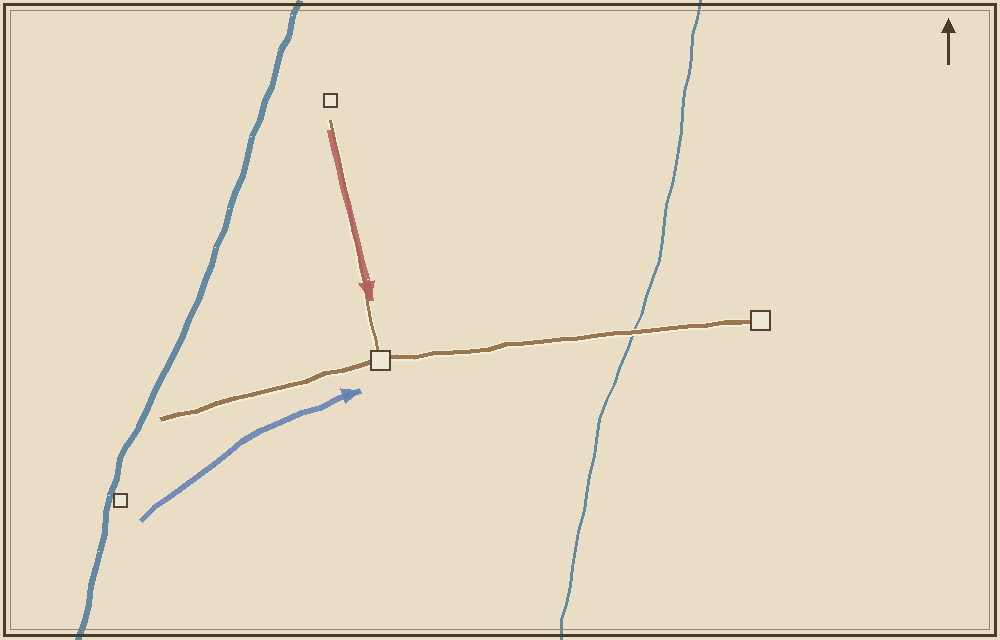 LÜTZEN
Leipzig
Halle (Pappenheim recalled)
Naumburg (the King's camp)
Saale
Gustavus Adolphus strikes before winter quarters
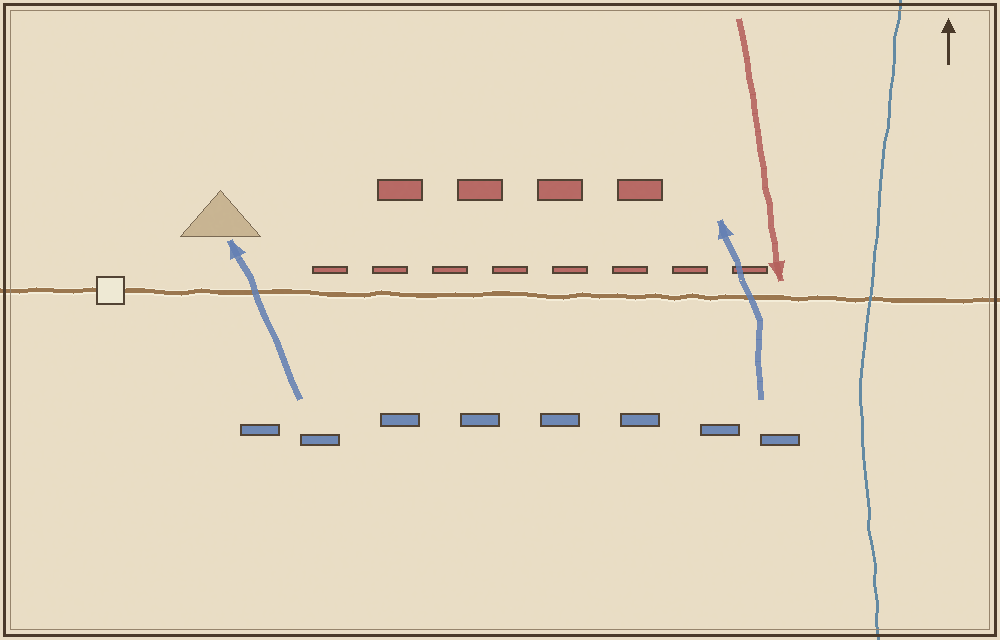 Lützen burning
the guns on Windmill Hill
the road ditches (musketeers)
fog (lifts about 11:00)
Pappenheim arrives at midday
the King falls in the smoke
Bernhard takes the hill at dusk