Battle of Bosworth 1485
1485 · Europe
22 August 1485 · South of Market Bosworth, Leicestershire, England
Tudor Army — Richard III's Army · 8 turns · 40 units
AI personality: Tudor Army Berserk / Richard III's Army Manoeuvre
See this battle in the battle list
Briefing
22 August 1485. South of Market Bosworth, Leicestershire, England
Henry Tudor landed in Wales and marched east with troops raised in France and men from Wales. Beside a marsh on Fenn Lane, the old Roman road, he met the army of Richard III. On the hills to the south stood the forces of Thomas Lord Stanley and his brother William, who watched without committing themselves to either side. The Earl of Northumberland stood behind the king.
[How the Tudors win] Eliminating Richard III wins at once. On points, take Ambion (10 points) and Redemore (5) and hold Whitemoors (10). The victory line is +18: the Tudor side wins if the margin from its side exceeds it. The Tudors move first. Up to 10 units may move at once. If Henry Tudor is eliminated, the Tudors lose at once.
[How Richard III wins] Eliminating Henry Tudor wins at once. Richard also wins if the margin falls below the line. Up to 10 units may move at once. If Richard III is eliminated, he loses at once.
[The two on the hill] The Stanley forces (7 units) begin on Richard III's side as standby units and do not move of their own accord. From turn 3 (William) and turn 4 (Thomas) they are checked each turn for defection; if it succeeds they join the Tudor side and begin to move. They do not defect on any turn when the Tudor combat strength is at or below 50% of its starting value. If approached or attacked, they begin to move while still on Richard III's side. Northumberland's force (4 units) is also on standby and does not move unless approached or attacked.
[Commanders] Tudor: Henry Tudor, John de Vere Earl of Oxford (vanguard), his uncle Jasper Tudor, Gilbert Talbot, John Savage, Rhys ap Thomas, and Philibert de Chandée with the French troops.
Richard III: Richard III, John Howard Duke of Norfolk and his son Thomas Earl of Surrey, Francis Viscount Lovell, Robert Brackenbury, Lord Ferrers, and Henry Percy Earl of Northumberland.
Stanley: Thomas Lord Stanley (husband of Henry's mother) and his brother William Stanley.
[Decisions this board poses]
- (Tudor) Keep Henry safe at the rear, or bring him closer to the Stanleys?
- (Richard III) Strike at Henry with the king's knights before the Stanleys move?
- (Both) Fight so as not to wake the Stanleys, or deliberately move next to them?
[Outcome] Oxford's vanguard advanced with the marsh on its right and broke Norfolk's vanguard; the duke was killed. Richard charged with only his household knights at Henry's banner and cut down the standard-bearer William Brandon, but William Stanley's men struck his flank and the king was killed. Northumberland never moved. Richard was the last English king to die in battle. Henry took the throne as Henry VII.
The location follows Foard and Curry (2013): the low ground along Fenn Lane. Numbers, order of battle and times are disputed and estimated here. The Stanleys begin on Richard's side because Lord Stanley had been summoned by the king and his son was held as a hostage. Combat strengths are derived from the paths to victory, not from head counts.
1 hex = 150 m, 1 turn = 20 minutes, 1 CS = about 200 men. T1 = 08:00, T8 = 10:20.
Maps
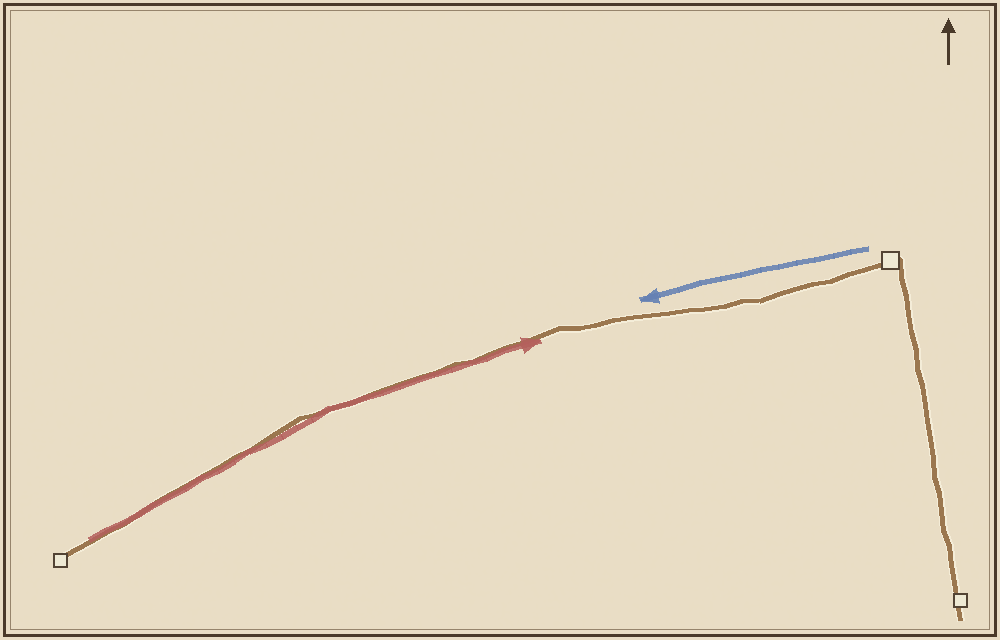 BOSWORTH
Milford Haven (landing)
Leicester
London
Henry Tudor marches east through Wales
Richard III from Leicester
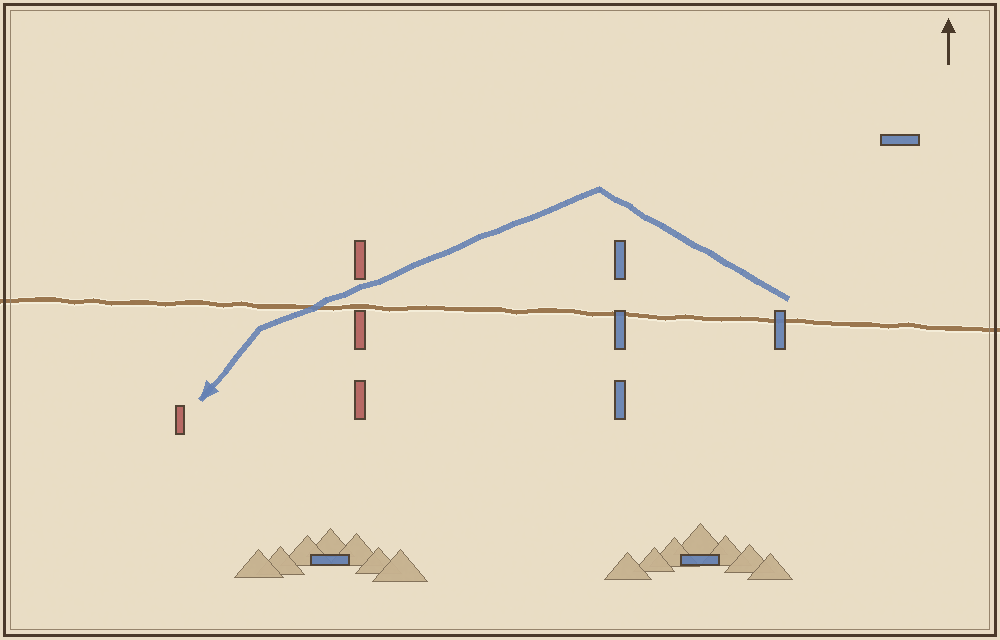 the Stanleys watch from the hills
the king's charge
the marsh
Northumberland (does not move)