Battle of Marsaglia
1693 · Europe Long
French Army — Allied Army · 12 turns · 82 units
Briefing
"Do not fire until the enemy is surely within reach."
— Marshal Catinat's order to his infantry, in substance
Piedmont, south-west of Turin. In the summer of 1693 the allied army under Victor Amadeus II, Duke of Savoy, was besieging the French fortress of Pinerolo. Catinat, newly made a marshal, gathered reinforcements at Fenestrelle in the Alps, came down the Susa valley behind the allies, and took up position at the foot of the heights of Piossasco. Against the advice of his generals, the duke abandoned the siege and offered battle in the open.
The fog lifts on the morning of 4 October. The allied army stands on a four-kilometre stretch of plain from Volvera in the south to the front of Piossasco in the north-west. On the right is the cavalry of Caprara and Prince Eugene; on the left, the cavalry of Milan and the German squadrons; in the centre, Pálffy's infantry, with four Spanish regiments on its left and German, Waldensian and Huguenot battalions on its right. In front stand thirty-one guns and a freshly dug ditch. To the north the French army has two lines of infantry in the centre, and on its right Vendôme's cavalry is coming down from the heights of Piossasco. At 9 a.m. the guns open fire.
[How the French win] Fourteen units may be activated each turn. French infantry has a combat strength of 4 (the allies 3): these are the men who closed without firing and went in with the bayonet. The French begin holding Piossasco (20 points), Tetti Francesi (10) and Bruino (10); taking the allied position at Volvera (20) and Orbassano on the Turin road (10, held by neither side) widens the margin. The allied centre stands behind the ditch (defence x2). The victory line is +70. If the margin from the French side exceeds +70, they have done better than history.
[How the allies win] Thirteen units may be activated each turn. This is a mixed army, and the Milanese cavalry is weak (on this day it left without fighting). Whether the ditch in the centre holds depends on whether the left wing can stop the cavalry coming down from the heights.
[Commanders] French: Marshal Catinat; Louis-Joseph, Duke of Vendôme; his brother Philippe, the Grand Prior; the Marquis de Larré; the Marquis de Vins; La Hoguette and d'Husson, who led the infantry. The Irish brigade (Mountcashel, Dillon and Clare) fought here for the first time in French service, and the first hussars seen in western Europe were present. Brigades and squadrons whose names are not recorded are called by their place in the line.
Allies: Victor Amadeus II, Duke of Savoy; Prince Eugene; Field Marshal Caprara; the Marquis of Leganés, governor of Milan; the Count of Louvigny; General Masset; Count Pálffy; Count Rabutin; and Charles, 2nd Duke of Schomberg, who led the Huguenots and was killed this day. The Spanish Tercio of Lisboa is also present.
[Decisions this board poses]
- (French) Bring the right-wing cavalry down from the heights of Piossasco and envelop the allied left, or send the infantry of the centre against the ditch first?
- (French) Avoid the firefight: where to go in all together?
- (Allies) Move the good cavalry of the right to the failing left? Doing so leaves Volvera exposed.
[Outcome] The French advanced slowly with their guns in front, endured the enemy's fire as they closed, and then the whole first line charged with the bayonet. The allied right withstood three assaults, but when Vendôme's cavalry enveloped the left the Spanish gave way, and the Milanese cavalry left the field without once engaging. The Tercio of Lisboa fought on behind a stream until it was overwhelmed; the Huguenot and Waldensian battalions were destroyed, and the Duke of Schomberg was killed. Nearly surrounded, the duke slowed the pursuit with a charge of his dragoons, and Prince Eugene and the rest fell back on Turin and Moncalieri. The allies lost 8,000 to 10,000 killed and wounded and 2,000 prisoners, and all their guns; the French lost 1,800. That night Catinat lodged at the small manor of La Marsaglia nearby and wrote his report to the king from there, and the battle takes its name from that house. Even so, the allied army did not dissolve; winter came, and three years later the duke made a separate peace with France.
The fog lifted, and cavalry came down from the heights
The infantry walked on without firing
Within reach, they lowered their bayonets
The cavalry of Milan left without fighting
The tercio fell with a stream at its back
The battle was named for the house where the marshal slept
The French are put at somewhat over thirty-five thousand and the allies at somewhat fewer. No reliable order of battle names the French regiments, so apart from the Irish brigade, the Gendarmerie and the hussars, units are called by their place in the line. The bayonet charge here is counted among the earliest made by infantry formed in line.
1 hex = 350 m, 1 turn = 30 minutes, 1 CS = about 500 men. Turn 1 = 9 a.m. on 4 October; Turn 12 = 2:30 p.m.
Maps
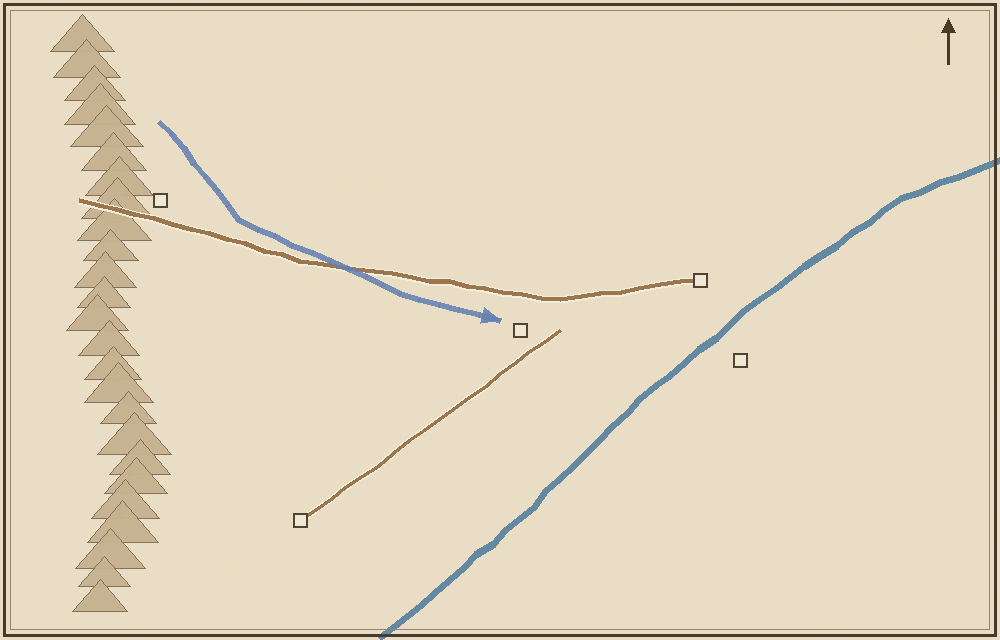 MARSAGLIA
Turin
Pinerolo (French fortress, besieged by the allies)
Susa (Catinat's descent)
Fenestrelle
Moncalieri
River Po
Alps
Catinat's march (September)
MARSAGLIA
Turin
Pinerolo (French fortress, besieged by the allies)
Susa (Catinat's descent)
Fenestrelle
Moncalieri
River Po
Alps
Catinat's march (September)
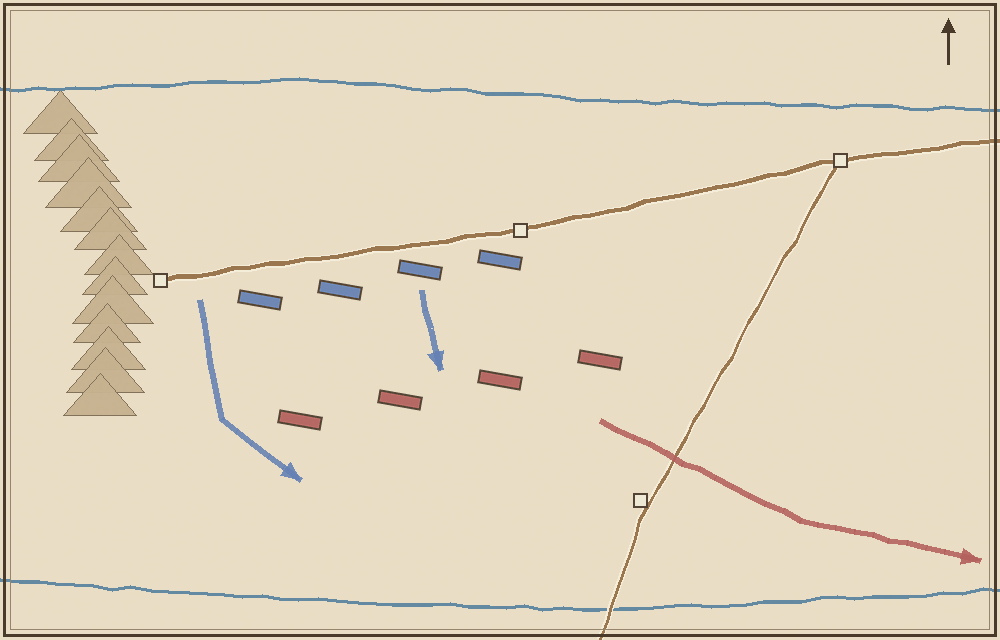 Piossasco (heights)
Volvera
Tetti Francesi
Vendôme's horse
Bayonets, without firing
Allied guns (31) and ditch
retreat to Turin and Moncalieri
Chisola
Sangone
Piossasco (heights)
Volvera
Tetti Francesi
Vendôme's horse
Bayonets, without firing
Allied guns (31) and ditch
retreat to Turin and Moncalieri
Chisola
Sangone